





Introduction
Nutrition plays a powerful and supportive role throughout cancer care – from the moment of diagnosis to treatment, recovery, and long-term survivorship. Yet, with so much information circulating on social media, blogs, and informal advice groups, patients and caregivers are often left overwhelmed or misled.
Many common beliefs about “good” and “bad” foods during cancer are based on personal opinions, fear, or outdated assumptions rather than scientific evidence. Myths can create unnecessary food restrictions, increase anxiety, and sometimes even lead to poor nutritional status – which can weaken immunity, reduce treatment tolerance, and affect quality of life.
The truth is simple: no single food can cure cancer, and no single food causes cancer on its own. What truly matters is balanced, consistent, evidence-based nutrition tailored to the individual’s needs.
To help cut through the confusion, this article breaks down 10 of the most common nutrition myths in cancer care, explains what current research actually says, and offers practical, science-backed takeaways that patients can safely follow.
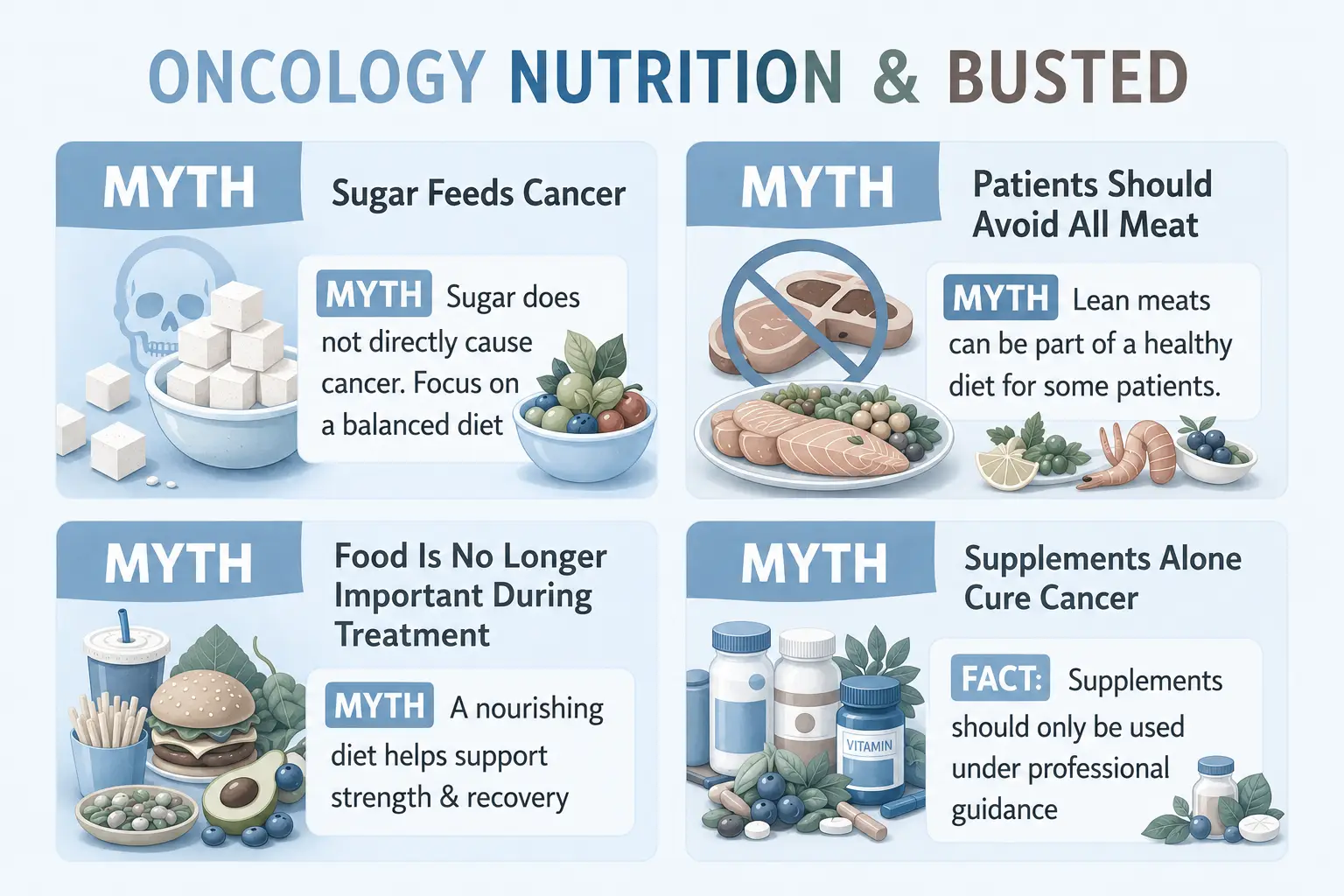
1. Myth: “Sugar feeds cancer – cutting out all sugar will stop cancer growth.”
Fact:
All cells in our body – healthy and cancerous – use glucose as their primary energy source. While cancer cells often consume glucose more rapidly, eliminating all carbohydrates doesn’t “starve” cancer; it instead weakens the body.
Studies by the National Cancer Institute (2024) show that extremely low-carb or ketogenic diets have no proven effect on tumour growth or survival outcomes in humans. In fact, these diets may lead to fatigue, nutrient deficiencies, and loss of lean muscle mass – all of which compromise treatment tolerance.
Takeaway:
Avoid excess & refined sugar (desserts, sodas, processed snacks), but include healthy carbs like fruits, whole grains, and vegetables for steady energy and gut health.
Understanding the Link between Sugar and Cancer: An Examination of the Preclinical and Clinical Evidence: https://pubmed.ncbi.nlm.nih.gov/36551528/
2. Myth: “Dairy products increase cancer risk, especially breast or prostate cancer.”
Fact:
The evidence around dairy and cancer is mixed but generally neutral. Large reviews (JNCI, 2022; Nutrients, 2023) found no consistent link between moderate dairy intake and breast or prostate cancer risk.
On the contrary, fermented dairy foods like curd and yogurt may have protective effects due to beneficial probiotics, calcium, and vitamin D content.
Takeaway:
There’s no need to eliminate dairy unless advised to do so for lactose intolerance or allergy. Opt for low-fat, natural dairy and avoid sweetened or ultra-processed milk products.
Dairy products intake and cancer mortality risk: a meta-analysis of 11 population-based cohort studies: https://pmc.ncbi.nlm.nih.gov/articles/PMC5073921/Association of Fermented Products with Risk of Cancer Recurrence and Mortality among Breast Cancer Survivors: https://pubmed.ncbi.nlm.nih.gov/36908185/
3. Myth: “Soy should be avoided in breast cancer because it contains phytoestrogens.”
Fact:
This is one of the most persistent myths – yet research consistently shows whole soy foods are safe and even protective for women with breast cancer.
Large cohort studies (JAMA, 2020; Breast Cancer Research, 2021) found that regular soy consumption was linked with lower recurrence and improved survival among survivors.
The phytoestrogens (isoflavones) in soy are plant-based and much weaker than human estrogen; in fact, they may block estrogen’s stronger effects on tumour cells.
Takeaway:
Include moderate portions of tofu, tempeh, edamame, and soy milk. Avoid highly processed soy supplements or protein isolates. Make sure the soy is from organically grown.
Soy Food Intake and Breast Cancer Survival (JAMA) – shows that post-diagnosis soy consumption is associated with reduced risk of death and recurrence: https://jamanetwork.com/journals/jama/fullarticle/185034
4. Myth: “High-dose vitamins or herbal supplements boost cancer recovery.”
Fact:
While vitamins and minerals are essential, taking them in mega doses – especially antioxidants like vitamins A, C, and E or herbal products such as turmeric capsules, ashwagandha, or green tea extracts – can interfere with cancer treatments.
Clinical evidence (ASCO, 2023; Cochrane Review, 2024) suggests that high antioxidant levels may reduce chemotherapy and radiation effectiveness by protecting cancer cells from oxidative stress, the very process that helps destroy them.
Takeaway:
Supplements should never replace a balanced diet and should only be used under a qualified oncologist or Nutritionist’s guidance. Whole foods remain the safest, most bioavailable nutrient sources.
Therapeutic controversies over use of antioxidant supplements during cancer treatment: a scoping review: https://pubmed.ncbi.nlm.nih.gov/39717397/
5. Myth: “Raw vegan or juice-only diets detox the body and cure cancer.”
Fact:
There is no scientific evidence that raw or juice-only diets can “detox” cancer cells or cure cancer. Instead, they can lead to protein deficiency, unintentional weight loss, and weakened immunity.
The body’s detox system already works efficiently through the liver, kidneys, and lungs – it doesn’t need “juice cleanses” to function. Also, consuming insoluble fibre can cause constipation for cancer patients.
Clinical nutrition guidelines (ESMO, 2024) emphasize that cancer patients require adequate calories, protein, and micronutrients to preserve strength and tolerate treatments.
Takeaway:
Include both cooked and raw foods for better digestion and safety. Focus on a rainbow plate – vegetables, fruits, whole grains, healthy fats, and proteins – not just juices.
A comprehensive clinical review pointing out how cancer and its treatments often cause metabolic and nutritional disturbances (weight loss, poor absorption, digestion issues). Maintaining balanced nutrition helps tolerance to treatment and quality of life: https://pubmed.ncbi.nlm.nih.gov/38140327/
6. Myth: “Animal protein should be restricted because it is acidic in nature & feeds tumours.”
Fact:
Animal protein is not the enemy – it is considered as high quality protein, loaded with amino acid, heme iron. It’s highly essential for cell repair, muscle preservation, immune health, and recovery after surgery or therapy.
Research (JPEN, 2022; Support Care Cancer, 2023) confirms that patients consuming adequate protein (1.0–1.5 g/kg/day) experience fewer complications, faster healing, and improved survival rates. Protein malnutrition, on the other hand, worsens fatigue, delays wound healing, and increases infection risk.
Takeaway:
Add quality proteins like lentils, eggs, fish, paneer, curd, lean meats, nuts, and soy. Balance is key – not restriction.
Evidence linking sarcopenia/protein status to chemotherapy toxicity & outcomes:Journal: Clinical Cancer Research, 2009;15(8):2920–2926: https://pubmed.ncbi.nlm.nih.gov/19351764/
7. Myth: “Natural or Ayurvedic tonics are safer than medical nutrition.”
Fact:
“Natural” doesn’t automatically mean “safe.” Many herbal ingredients can interact with chemotherapy or affect liver and kidney function.
For example, turmeric or green tea extracts in high doses may alter drug metabolism; ashwagandha and ginseng can overstimulate immunity during immunotherapy.
The Society for Integrative Oncology (2023) advises clinicians to screen patients for herbal supplement use because of rising herb–drug interactions.
Takeaway:
Always inform your oncologist or onco-dietitian about any herbal products you’re using. Evidence-based, supervised integrative care is far safer than self-medication.
Fasinu PS, Bouic PJ, Rosenkranz B. – “Herbal Interaction With Chemotherapeutic Drugs – A Focus on Clinical Evidence” (Frontiers in Oncology, 2019): https://www.frontiersin.org/articles/10.3389/fonc.2019.01356/full.
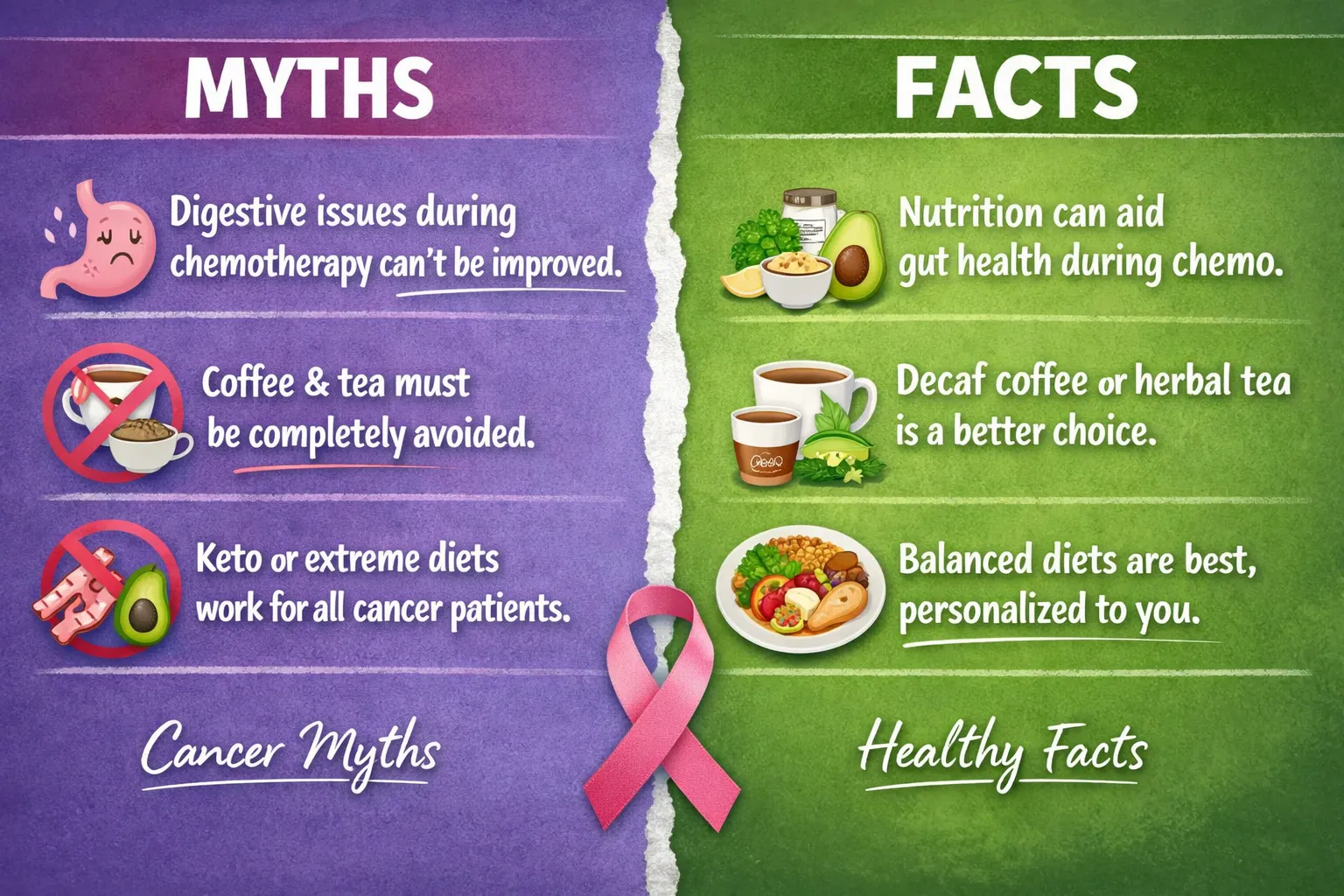
8. Myth: “Coffee and tea should be completely avoided during cancer.”
Fact:
Moderate intake of coffee or tea is generally safe, but adding excess sugar and dairy may be less suitable for many cancer patients, as it can aggravate inflammation or digestive sensitivity during treatment.
High caffeine dependence can also increase dehydration, which slows down metabolism, affects digestion, and contributes to sleep disturbances or insomnia. When possible, decaffeinated coffee or herbal teas are better tolerated. If not, regular tea or coffee is best enjoyed in moderation and without excess additives.
Takeaway:
2–3 cups per day of unsweetened coffee or tea are fine. Choose decaffeinated versions if you’re sensitive or have reflux issues.
Coffee drinking and cancer risk: an umbrella review of meta-analyses – BMC Cancer (2020): https://bmccancer.biomedcentral.com/articles/10.1186/s12885-020-6561-9
9. Myth: “Keto, fasting, or extreme carb-cutting diets improve cancer outcomes for everyone.”
Fact:
Therapeutic fasting or keto diets help only specific cancer types in controlled settings (e.g., glioblastoma research).
For most patients, these diets cause:
Severe weight loss, muscle wasting (sarcopenia), impaired immunity. Sarcopenia is linked to 40–60% higher treatment complications.
Takeaway:
Anti-cancer nutrition must be personalized, not extreme.
Review on ketogenic diets & clinical oncology evidence:https://onlinelibrary.wiley.com/doi/full/10.1111/nbu.12693 (Nutrition Bulletin / review on ketogenic diets in cancer, 2024)
10. Myth: “Nutrition can not fix the GI issues develops during chemotherapy”
Fact:
Chemotherapy can disrupt the gut lining and disturb the balance of gut bacteria, leading to digestive discomfort, reduced immunity, and poor nutrient absorption. Evidence shows that the right nutrition can help heal the gut and restore microbial balance, supporting gut health both during and after treatment. The following foods play an important role in this recovery process.
- Soluble fibre (oats, barley, banana, dal) feeds beneficial bacteria
- Fermented foods (curd, buttermilk, idli batter) help restore probiotics
- Omega-3 fats (Flax seeds, chia seeds, walnuts) reduce intestinal inflammation
- Prebiotic foods (garlic, onion, sweet potato) strengthen microbiome diversity
Thoughtful food choices, tailored to individual tolerance, can meaningfully support digestive comfort during treatment.
Takeaway:
Gut-focused nutrition reduces diarrhoea, constipation, nausea, and improves treatment tolerance.
Role of gut microbiota in anticancer therapy (review – mechanisms & clinical relevance):
https://www.nature.com/articles/s41392-023-01406-7 (Zhao et al., 2023 – Nature partner journal review)
Conclusion
Nutrition during cancer treatment doesn’t have to be confusing or stressful. While myths and extreme diet trends spread quickly, the science consistently shows that balanced, flexible, and nourishing eating patterns support strength, immunity, and overall well-being far better than strict rules or restrictions.
Every person’s body, treatment journey, and food tolerance are different – which means there is no single “cancer diet” that fits everyone. Instead, focusing on wholesome foods, adequate protein, steady energy, and gentle gut support can make a meaningful difference in how the body copes with treatment and recovers.
In the end, good nutrition is not about chasing miracles – it’s about giving your body the steady, reliable fuel it needs to heal, stay strong, and function at its best.
Author: Mrs Shalini Chakraborty
Senior Onco-Nutritionist