





Home / Knowledge Hub

Recent Blogs

Lymphatic Massage

What Is a Lymphatic System?

The lymphatic system is an essential part of your body’s circulatory and immune systems. It works quietly behind the scenes to help maintain fluid balance, support immune function, and assist in removing waste and cellular debris from tissues throughout the body.

Key Functions of the Lymphatic System

1. Fluid Balance

Every day, blood plasma seeps out of capillaries into the spaces between cells. Most of this fluid is reabsorbed by the blood vessels, but some remains in tissues as interstitial fluid. The lymphatic system collects this fluid, now called lymph, and returns it to the bloodstream, helping prevent swelling and maintain stable fluid levels.

2. Waste and Toxin Transport

As lymph travels through the network of vessels, it passes through small structures called lymph nodes. These act like filters – capturing and helping the body clear:

  • Cell waste
  • Toxins
  • Pathogens (like bacteria or viruses)

This filtration helps protect overall health and supports immune surveillance.

3. Immune Support

Lymph nodes are hubs of immune activity. They contain:

  • White blood cells
  • Lymphocytes
  • Other immune system agents

These cells help recognise and respond to infections, foreign particles, and damaged cells.

4. Fat Absorption

In the intestines, specialised lymphatic vessels called lacteals absorb fats and fat-soluble nutrients from food and transport them into the bloodstream – a vital part of nutrition.

Image : https://nurseslabs.com/lymphatic-system-anatomy-physiology/

How the Lymphatic System Works

The lymphatic network includes:

  • Lymphatic vessels – pathways that transport lymph fluid
  • Lymph nodes – small, bean-shaped filters located throughout the body
  • Lymphoid organs – such as the spleen and thymus

Unlike the circulatory system, the lymphatic system does not have a central pump (like the heart). Instead, lymph is moved through:

  • Muscle contractions caused by movement
  • Breathing (diaphragmatic motion)
  • Gentle pressure changes in the body

This is why movement, breathwork, and supportive therapies can help keep lymph flowing effectively.

What Happens When Lymph Flow Is Impaired?

If lymphatic flow slows or is disrupted, fluid can build up in tissues. This may lead to:

  • Swelling or heaviness in limbs or tissues
  • Stiffness or reduced mobility
  • Fluid retention after surgery or radiation.

These changes are common after cancer treatments that involve lymph node removal or radiation near lymphatic pathways.

How Manual Lymphatic Drainage Supports the System

Manual Lymphatic Drainage (MLD) is a gentle, light-pressure massage technique that guides lymph fluid toward functioning lymph nodes. It works with your body’s natural lymph pathways to support fluid movement and tissue comfort – especially when the system is compromised by surgery, radiation, or inactivity.

MLD is:

  • Gentle (very light touch)
  • Directional (guided along lymph pathways)
  • Integrative (combined with movement, breathwork, and rehabilitation)

When delivered by trained professionals in an oncology-aware setting like EaseMyCancer, MLD can help support comfort, reduce fluid discomfort, and enhance quality of life
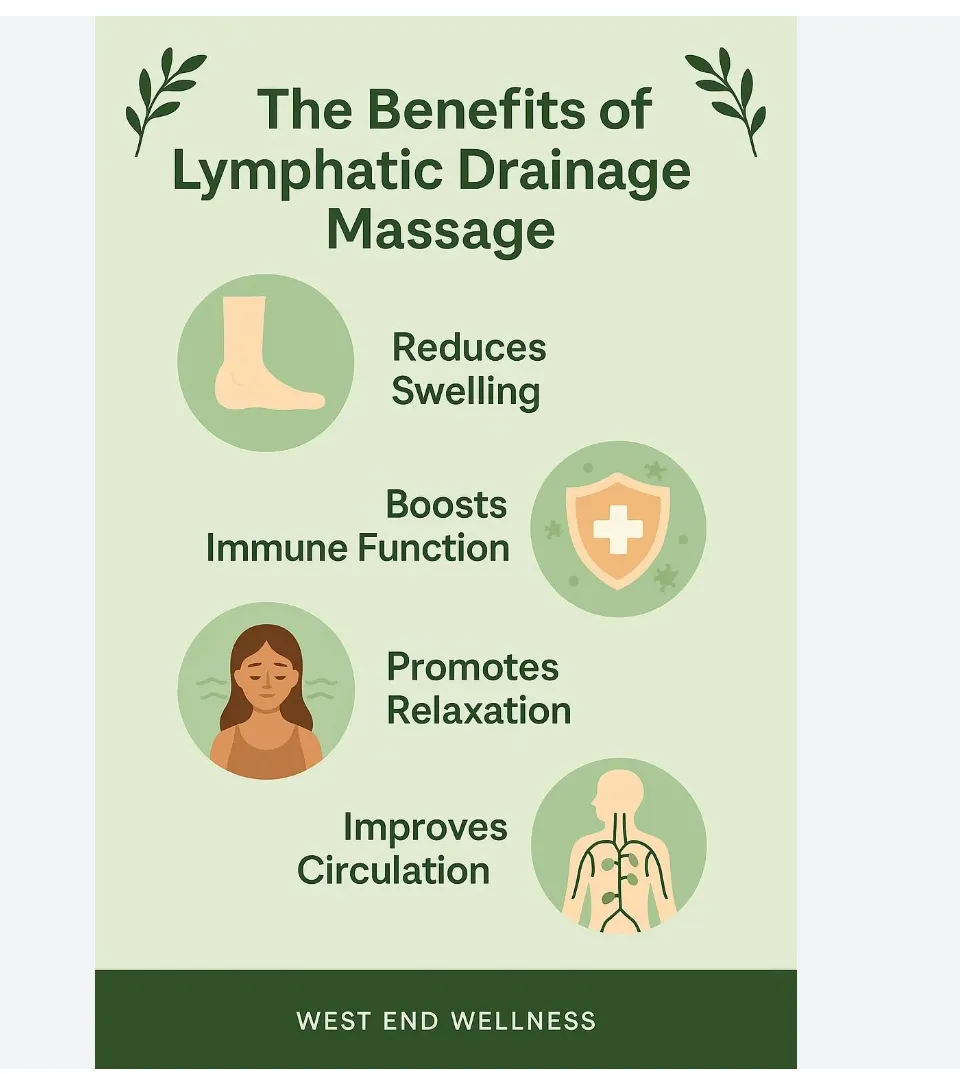
Why Lymphatic Massage Is Used in Oncology Rehabilitation

In oncology care, lymphatic massage is used as a supportive therapy, not as a replacement for medical treatment. When delivered by trained professionals and coordinated with movement and medical guidance, it can support the body’s recovery processes by:

  • Improving tissue comfort
  • Reducing sensations of heaviness or congestion
  • Supporting mobility and ease of daily movement
  • Enhancing overall quality of life

Manual Lymphatic Drainage is recognised within oncology rehabilitation and survivorship care for its role in managing treatment-related swelling and supporting patient comfort, when appropriately indicated and delivered.
(International Society of Lymphology; Cochrane Review)

Integration With Movement and Rehabilitation

Lymphatic massage is most effective when it is not delivered in isolation, but integrated with other supportive modalities that encourage natural lymph flow.

At EaseMyCancer, lymphatic massage is combined with:

  • Gentle, adaptive movement
  • Breath-based practices that support diaphragmatic lymph movement
  • Restorative positioning to reduce tissue congestion
  • Oncology-aware rehabilitation strategies

This integrated approach allows the body to engage both passive and active mechanisms of lymphatic circulation, while respecting fatigue, tissue sensitivity, and treatment effects.

Safety and Individualisation

Every lymphatic session is carefully adapted based on:

  • Individual diagnosis and treatment stage
  • Surgical and radiation history
  • Current medical guidance
  • Energy levels and tissue sensitivity

Lymphatic massage is modified or avoided in the presence of specific medical contraindications and is always delivered within clear clinical and ethical boundaries.

How This Supports Recovery at EaseMyCancer

Lymphatic Massage at EaseMyCancer is:

  • Oncology-sensitive
  • Evidence-aligned
  • Delivered by trained professionals
  • Integrated within a structured rehabilitation framework

It is designed to support comfort, movement, and quality of life, while respecting the complexity of cancer treatment and the body’s capacity to heal.

Lets conclude !

The lymphatic system is your body’s fluid balance and immune highway. It works quietly to return fluid to the bloodstream, filter waste, and support immunity. Movement, breath, and gentle therapies can help maintain effective lymph flow – especially after cancer treatment.

Manual lymphatic drainage is a recognised supportive therapy in oncology rehabilitation and survivorship care, particularly for managing treatment-related swelling and improving comfort and quality of life when delivered by trained professionals and integrated with movement and medical guidance.

Frequently Asked Questions About Lymphatic Massage

1. Is lymphatic massage the same as regular massage?

No.

Lymphatic massage is very different from deep tissue or relaxation massage. It uses light, slow, and rhythmic movements designed to support lymph flow just beneath the skin. Deep pressure is avoided, especially in people undergoing or recovering from cancer treatment.

2. Is lymphatic massage only needed where there is visible swelling?

Not necessarily.

The lymphatic system works as a whole-body network. Effective lymphatic massage often begins by supporting central drainage pathways before addressing specific areas. This approach helps the body manage fluid movement more efficiently overall.

3. Is lymphatic massage painful?

No.

Lymphatic massage is gentle and should not cause pain. Most people experience it as calming and supportive. Any discomfort indicates the technique should be modified.

4. Can lymphatic massage be done if I have a chemo port, PICC line, or cannula?

Yes, with proper care.

Areas with medical devices are not directly worked on. Sessions are carefully adapted to work safely around ports, lines, or sensitive areas, following medical guidance and individual needs.

5. How is medical lymphatic massage different from spa or cosmetic lymphatic massage?

Medical lymphatic massage:

  • Is delivered by trained, oncology-aware professionals
  • Follows anatomical lymphatic pathways
  • Is adapted to diagnosis, treatment stage, and recovery needs
  • Prioritises safety, comfort, and function

Cosmetic or spa-based lymphatic treatments focus on appearance and are not designed for oncology support.

6. How does lymphatic massage work alongside yoga and rehabilitation?

Lymphatic massage supports passive lymph movement, while gentle yoga, breathwork, and functional movement support active lymph circulation. Together, they create a balanced, integrative approach that respects fatigue, tissue sensitivity, and recovery.

Verify your OTP

Please fill the OTP 

Get Access

Please fill the form to get access

Home / Terms & Conditions

EaseMyCancer Terms & Condition

By enrolling in any program offered by EaseMyCancer, I understand and agree that:

  • Program fees are payable in advance and are generally non-refundable unless otherwise stated in writing.
  • Sessions must be used within the validity period of the selected plan. Missed sessions may not be compensated or carried forward.
  • Participation is voluntary, and I may discontinue the program at any time; however, fees already paid may not be refundable.
  • EaseMyCancer does not guarantee specific health, treatment, or recovery outcomes.
  • All educational materials, recordings, and resources provided by EaseMyCancer are for personal use only and may not be copied, shared, or reproduced without prior written permission.
  • EaseMyCancer and its team shall not be held liable for any injury, loss, or damages arising from participation in the program, except to the extent required by applicable law.
  • These Terms & Conditions are governed by the laws of India, and any disputes shall be subject to the jurisdiction of the courts of Bengaluru.

Home / Consent Form

EaseMyCancer Consent Form

Introduction

At EaseMyCancer, we provide supportive care that nurtures the body, mind, and spirit. This consent form ensures that you are fully informed about our services, your rights, and responsibilities before participation.

1. Purpose of Services

EaseMyCancer offers supportive care services, including:

  • Yoga, mindful movement practices, and emotional well-being support.
  • Nutrition guidance and personalised nutrition plans.
  • Psycho-oncology group sessions and counselling.

These services support your overall health and quality of life. They are not a replacement for medical treatment or preventive in nature, and are meant to complement your medical care.

2. Information Sharing & Confidentiality

  • I consent to share personal, medical, and emotional information only for designing and delivering my personalised support plan.
  • This information may be shared within the EaseMyCancer team (program coordinator, yoga & emotional well-being specialists, nutritionists, psycho-oncologists) solely for my care.
  • My data will be securely stored and not shared outside EaseMyCancer without my consent, except where required by law.

3. Payment & Services

  • Services are chargeable and payment is required in advance.
  • Fees cover planning, delivery, and follow-up.
  • Payments are non-refundable, unless otherwise stated.
  • Missed sessions beyond the agreed schedule will not be compensated or carried forward.

4. Responsibility & Medical Disclaimer

  • I will continue to consult my doctor regarding all treatment decisions.
  • I have informed and taken consent from my consulting doctor regarding the program.
  • I accept full responsibility for my health and will inform my facilitator of any changes.
  • EaseMyCancer does not provide emergency medical services. In an emergency, I will contact my doctor or emergency services.

5. Participation

  • Participation is voluntary.
  • I may withdraw consent at any time by providing written notice; service fees may not be refundable.

6. Recording & Documentation

  • Apart from yoga and emotional well-being sessions, which may be recorded for internal quality review and training purposes, no other session will be recorded by EaseMyCancer without my explicit consent.
  • I agree as a participant not to record any session in any form to maintain privacy of other participants.

Tavleen

Behavioural Insights & User Research Specialist

Specializes in behavioural insights and user research with experience across health & fitness, government, and retail sectors. Focuses on translating human behaviour into strategic insights that inform product and business decisions, contributing to user-centered and data-driven approaches.

Nitin Agarwal

Technology Advisor, EaseMyCancer

Technology leader and entrepreneur with nearly two decades of experience building and scaling large-scale digital platforms. Has held leadership roles across global technology companies including Flipkart, Ola, GoTo Group, Yahoo, and Curefit (Cult.fit), and currently leads product and engineering at Bhanzu. Brings expertise in product engineering, platform scalability, and innovation, supporting EaseMyCancer in building accessible, technology-driven patient care solutions.

Dr. Sai Vivek V

Consultant Medical & Hemato-Oncologist | Advisor, EaseMyCancer

Consultant Medical and Hemato-Oncologist at Aster Hospitals with nearly six years of experience. Expertise includes solid organ and blood cancers in adults and children, precision oncology, immunotherapy, preventive oncology, and integrative cancer care. Academic background includes MBBS, MD in Internal Medicine, and DM in Medical Oncology. Also serves as an Advisor at EaseMyCancer, supporting patient-centered and integrative oncology initiatives.

Dr. Seema Rao

Director & Consultant, Palliative Medicine | Advisor, EaseMyCancer

Director and Consultant in Palliative Medicine at Manipal Hospice and Respite Center, with a background in psychiatry and a Master’s in Palliative Medicine (Distinction) from Cardiff University as a Commonwealth Scholar. Has led major clinical, academic, and research initiatives, including ICU–palliative care integration and national training programs. Focus areas include comprehensive palliative care and psycho-spiritual support. Serves as an Advisor at EaseMyCancer, contributing to integrated and compassionate care systems.

Priya Kataria

Senior Clinical Nutritionist & Therapy Delivery Lead

Leading clinical nutritionist specializing in oncology nutrition, with over a decade of experience supporting more than 10,000 cancer patients. Known for delivering outcome-driven, personalized nutrition strategies that improve treatment tolerance, recovery, and quality of life. Approach is rooted in clinical precision and integrative care, combining detailed assessments with scientifically backed interventions aligned with medical treatment.

Sonal Devji Patel

Onco Yoga Trainer

Certified Yoga Practitioner (MSc Yoga & Vedic Therapy) and Gold Medalist in Yoga, with therapeutic training at Arogyadhama. Currently serves as an Onco Yoga Trainer at EaseMyCancer, delivering personalized yoga and pranayama sessions for individuals affected by cancer. Focus areas include reducing fatigue, improving energy levels, and enhancing emotional well-being to support resilience during treatment.

Rajeshwari A

Senior Psycho-Oncologist

Brings nearly a decade of experience in supporting individuals and families navigating the psychological challenges of cancer. Has supported over 10,000 patients and their families through evidence-based, patient-centered psycho-oncology care, helping strengthen emotional resilience and quality of life. Actively collaborates with multidisciplinary teams and facilitates individual therapy and support groups, creating safe spaces for coping, healing, and meaningful connection.

Hemalatha S N

Program Coordinator & Executive Assistant – Founder’s Office

Brings a strong academic background in Biochemistry along with experience in supporting individuals navigating oncology care. Work focuses on patient coordination, program management, and ensuring seamless communication across teams. Closely collaborates with clinical and operational teams while supporting the Founder’s Office with coordination and day-to-day execution, contributing to a structured and supportive environment that enhances patient experience and organizational efficiency.

Parul Agarwal

Founder, EaseMyCancer

Founder of EaseMyCancer, Certified Cancer Support Specialist (UK), and Certified Yoga Teacher with nearly a decade of experience in healthcare and wellness. Among the first few Indians to complete advanced international specialization in cancer support and integrative oncology care. Designs structured, evidence-informed programs focused on preventive health, stress regulation, emotional resilience, and sustainable wellbeing for individuals and organisations.